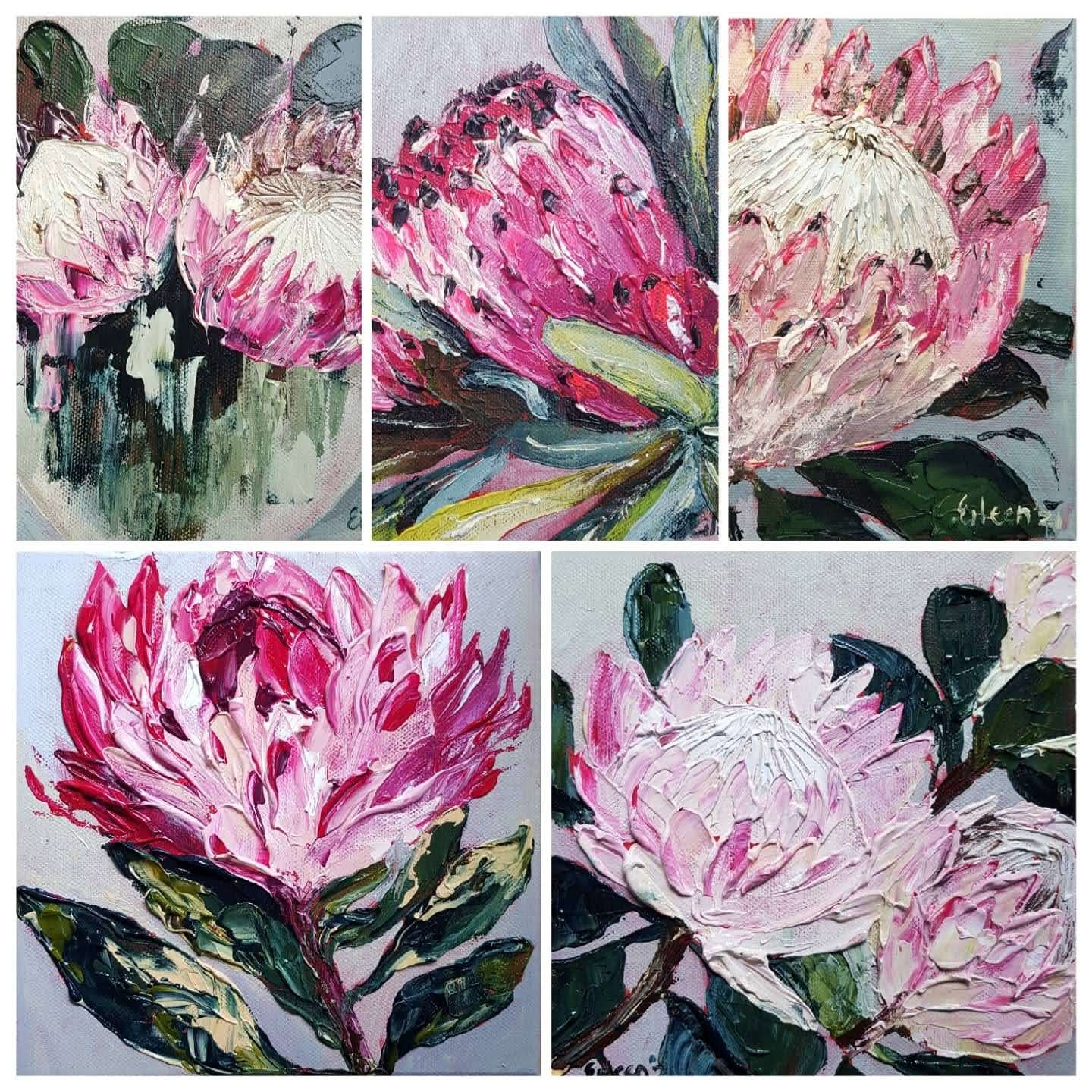
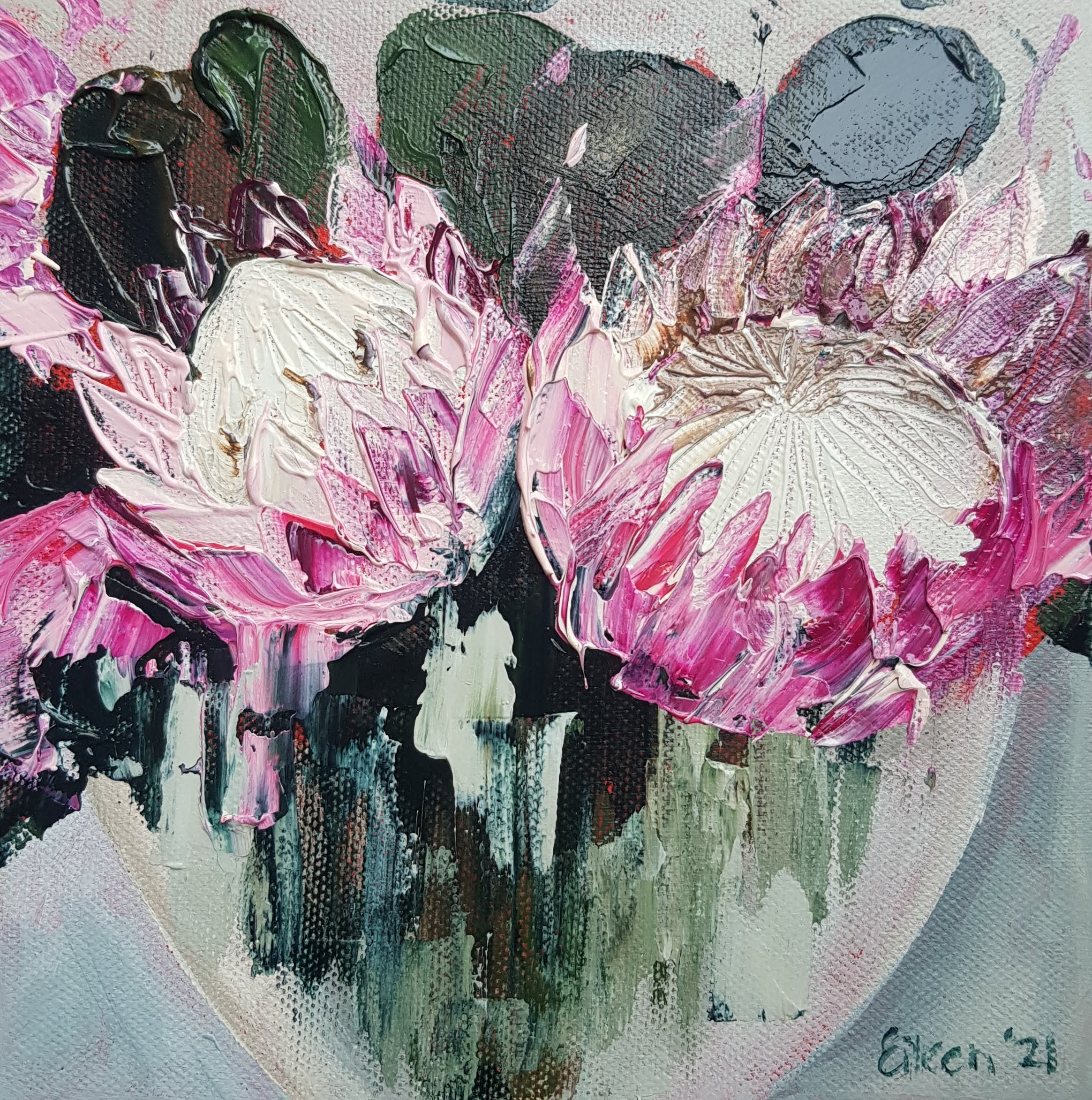
Before I began painting I added a cadmium red coloured ground to the whole canvas. I wanted the red to come through the grey background as well as show through the scratchings from the palette knife around the protea centres and their outside petals and leaves. The red is also great for warm layers later on, and adding depth to the shadows. Ultimately it will tone the entire painting and provide contrast for the complimentary colours.
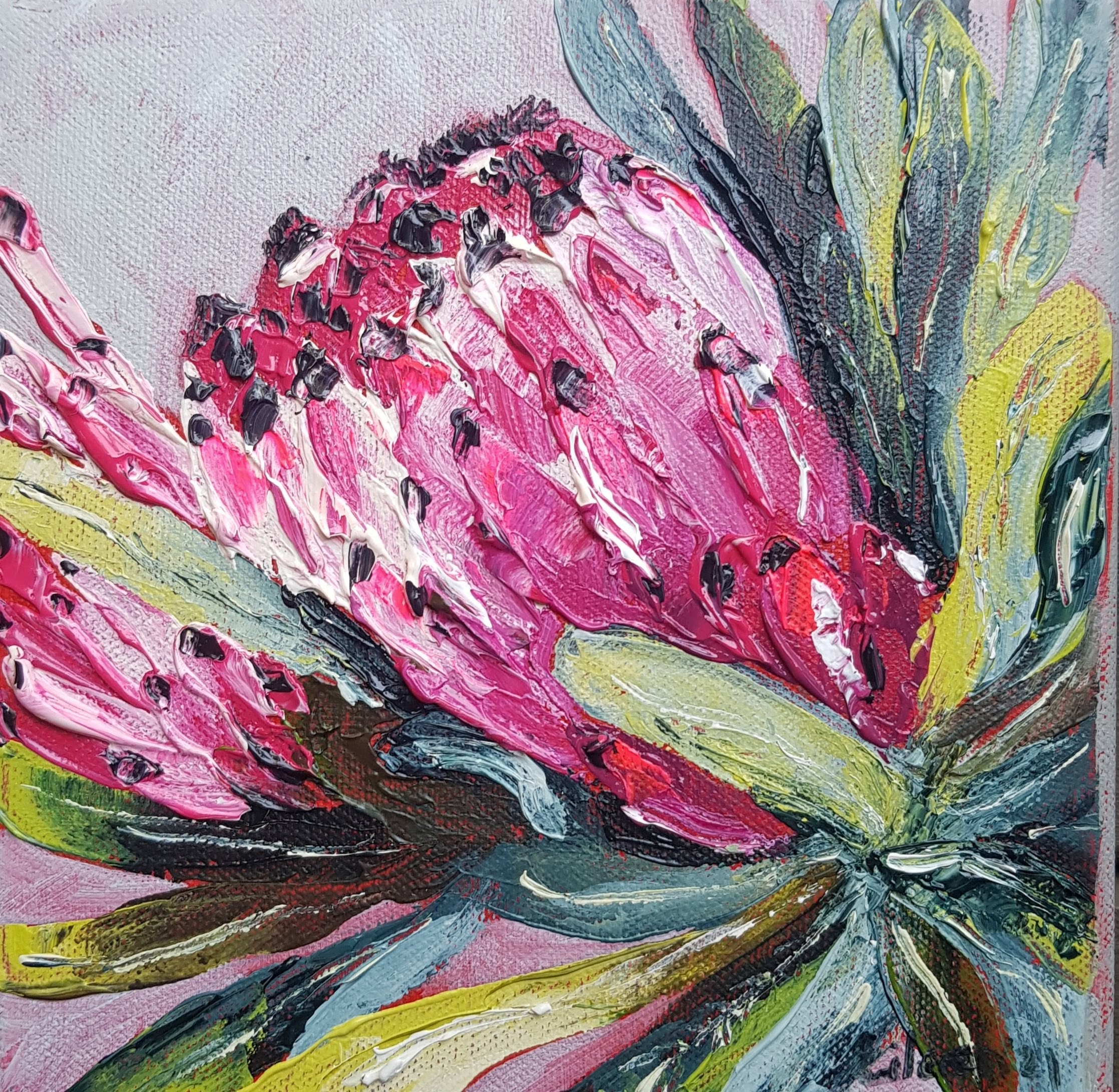
Proteas date back approximately 300 million years, and are considered to be among the oldest families of flowering plants on the planet. The King Protea develops 6 to 10 bowl-shaped flower heads that consist of a number of small, tubular-shaped flowers. They can be pink or crimson-coloured and are surrounded by large, stiff, pointed bracts (modified petals-like leaves). A flower head can easily reach about 30 cm in diameter and it looks like large artichoke. It is widely distributed in the southwestern and southern parts of South Africa in the fynbos region, and is the national flower of South Africa. You can blame the insertion of these random facts on the fact that I am a horticulturists daughter, and a climb up table mountain with my father was always a botanical adventure.
Named after Proteus, son of Poseidon from Greek Mythology, the Protea itself writes its own story-of-the-people; being synonymous with South Africa. Appearing on birth certificates, passports and coinage to name a few; it is omnipresent in the everyday and has featured in my life since my childhood when my late horticulturist father and I wandered the colourful flower markets in the streets of Cape Town. Growing up, such experiences instilled in me a passion for flowers that became an integral theme throughout my work. The palette knife, thick impasto paint, and rich colours help bring these memories to life.
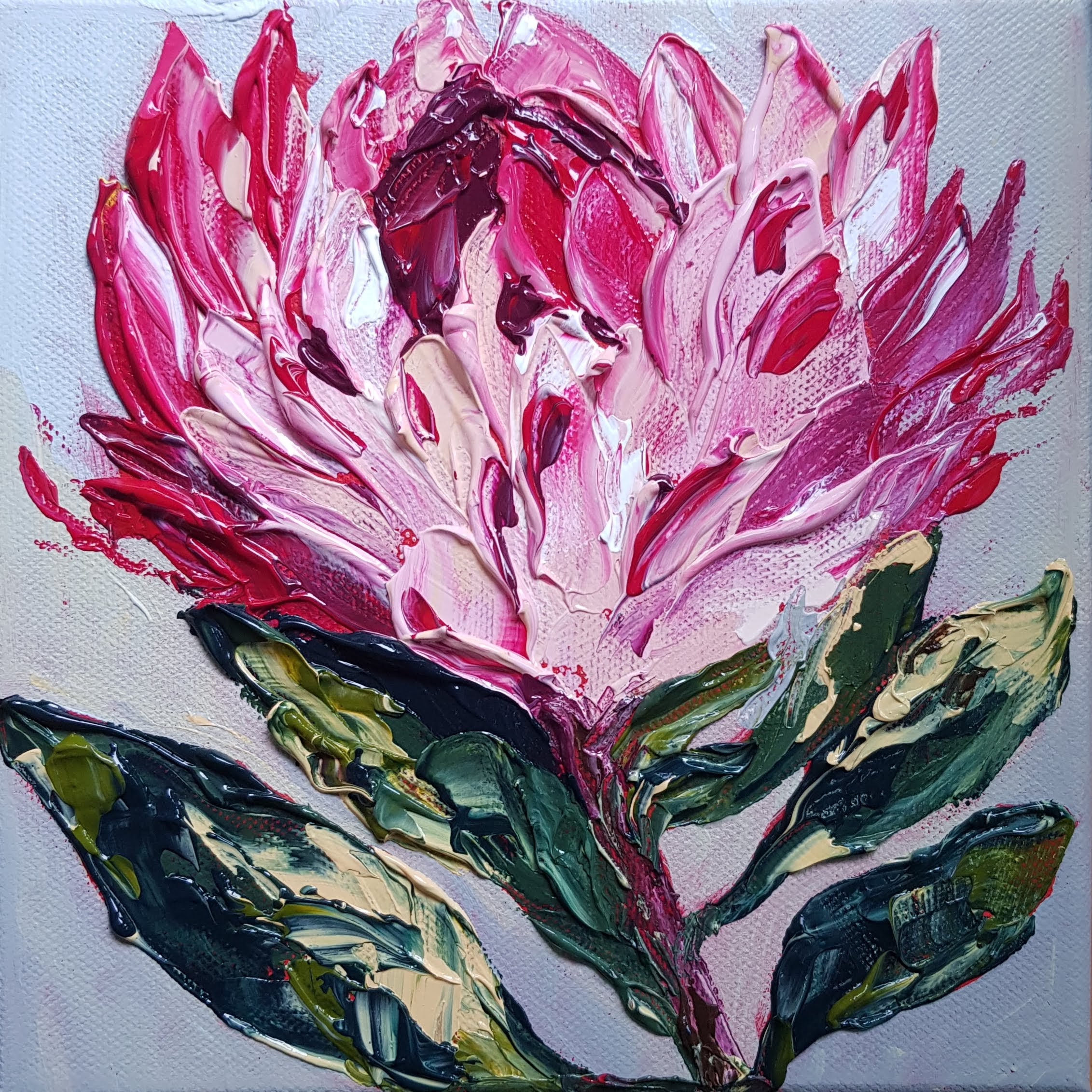
The red adds a bit of drama to the shadowed grey on the canvas, and the pink tint it gives to the white and shades of cream. I also like how the red shows through between the leaves and between the bracts and the artichoke flower shaped heads. The red now becomes an important part of the colour composition of the painting.
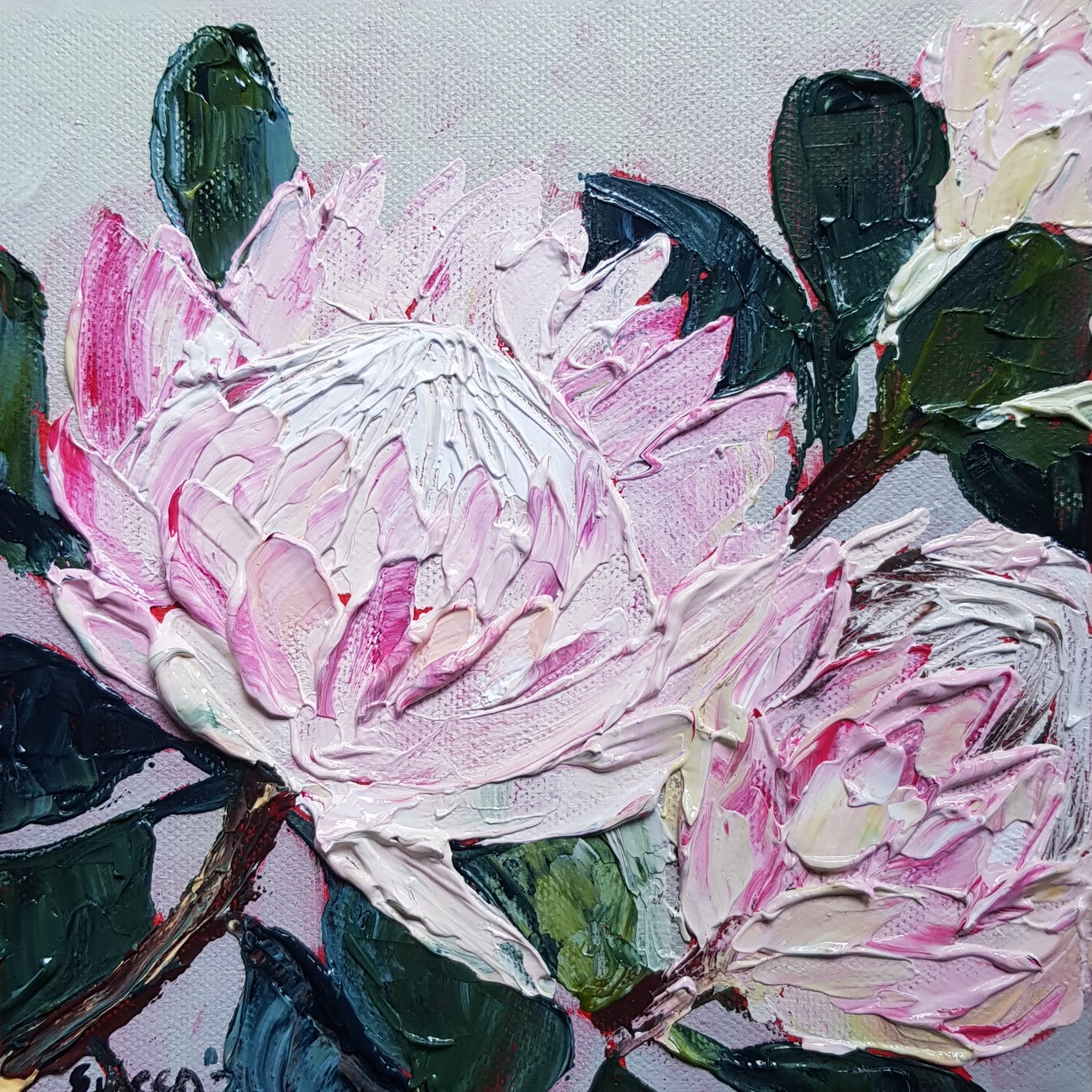
I mixed the cream rather than using a cream colour from the tube by adding burnt sienna to the white, as well as a dash of raw umber, and burnt umber. Add a little brown to white, rather than white to some brown, as noted above. If this doesn’t give you a cream you like, add a tiny bit of yellow and/or red (or orange) to warm up the mixture. I added just a dash of Cadmium red to make a slightly deeper warm colour to the cream.
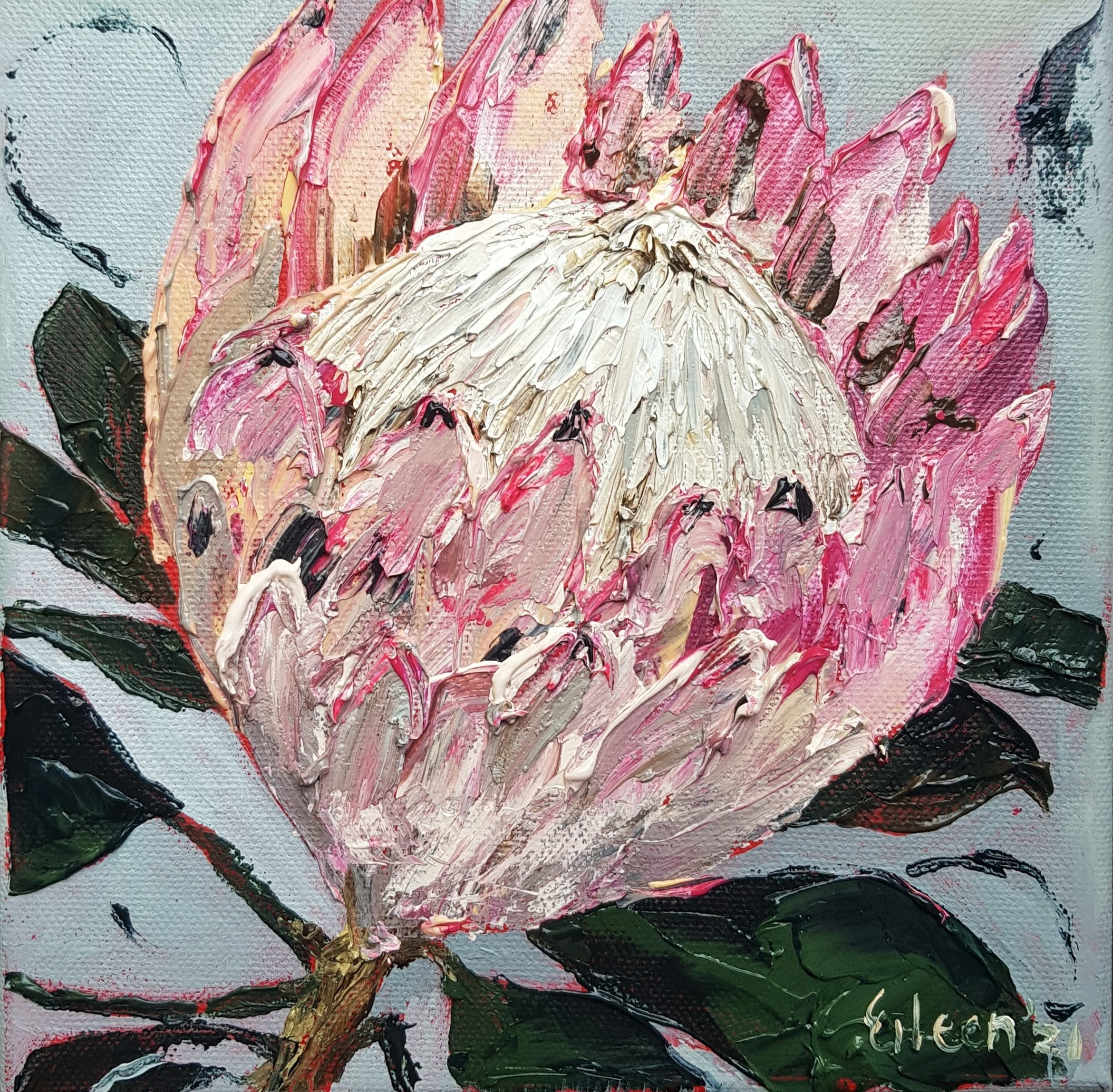
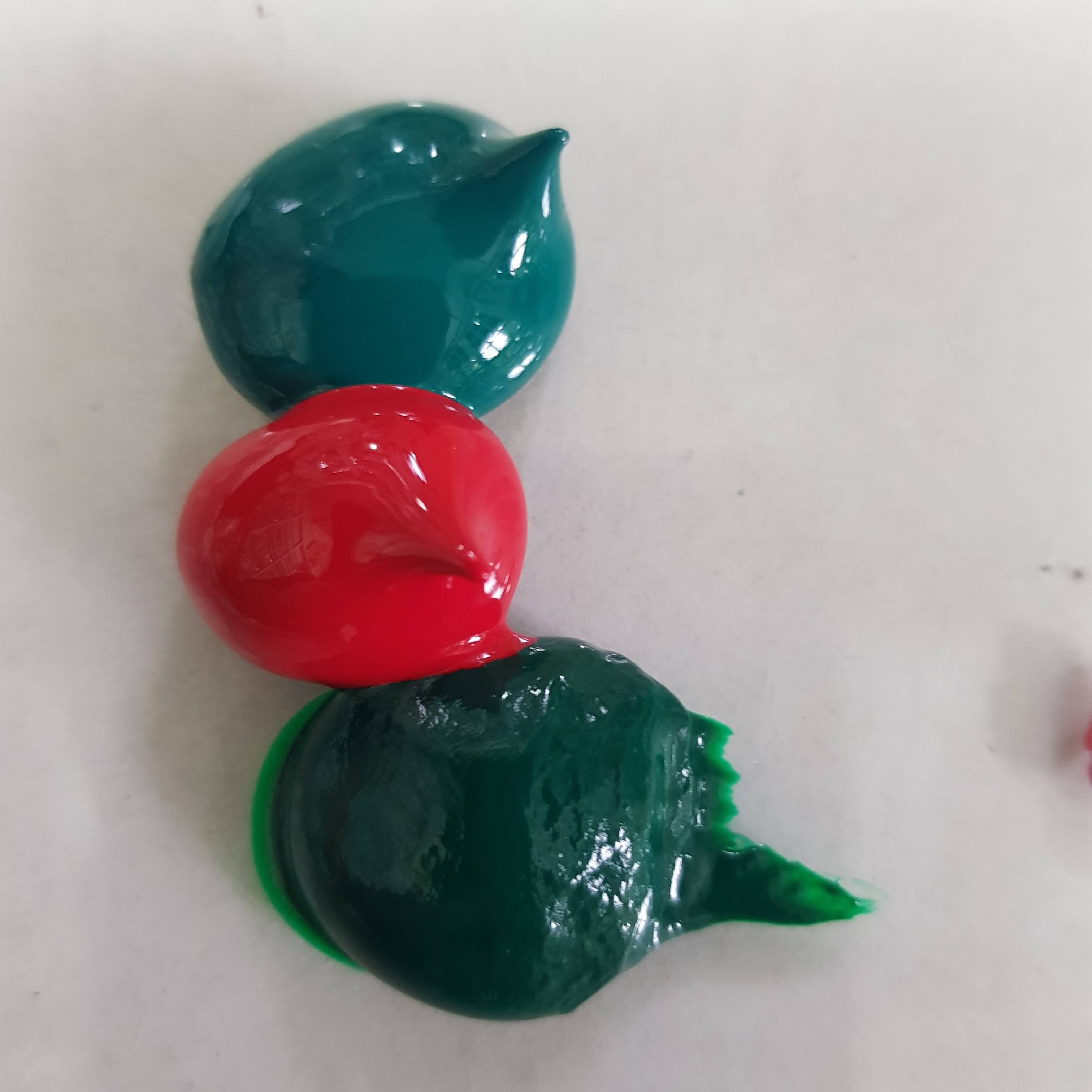
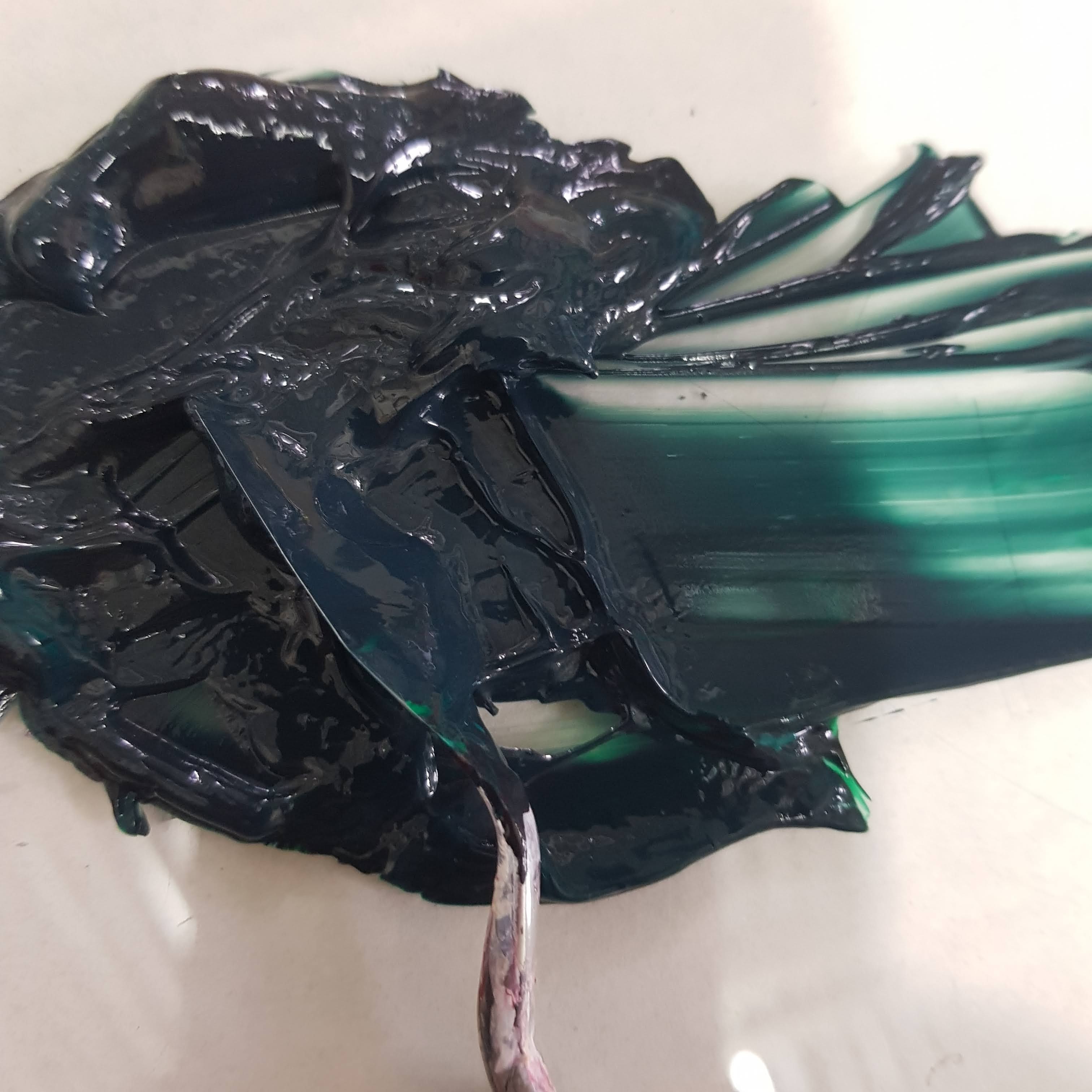
The dark green I use in the foliage of the proteas is almost a black. My usual go to black mix is Ultramarine blue and Burnt umber, but I didn’t like that mix for the leaves Instead for the dark green, almost black areas on the foliage and stalks I used a mix or Viridian, Phthalo green, and Crimson. Not a mix I use often but perfect for these proteas.
 artbyeileen
This is a flower I have seen in catalogues, but don’t think it would do well here in central Brittany. I enjoy the horticultural notes. 🙂
No they wouldn’t do well at all in Brittany. They need very dry summers and wet winters, and believe it or not a good fire which is a natural occurrence on the mountain slopes were the fynbos grows – it helps with the seed germination.