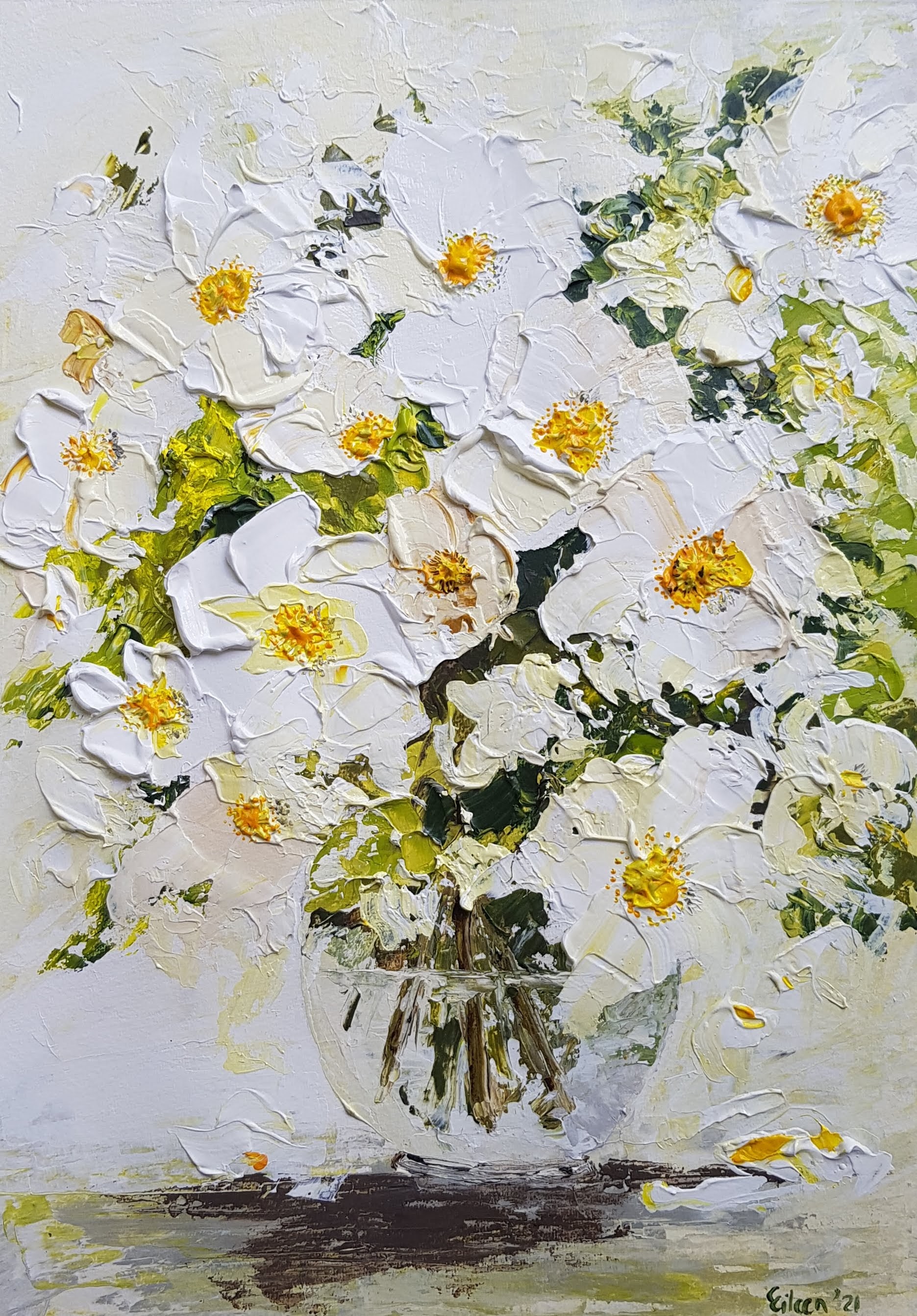
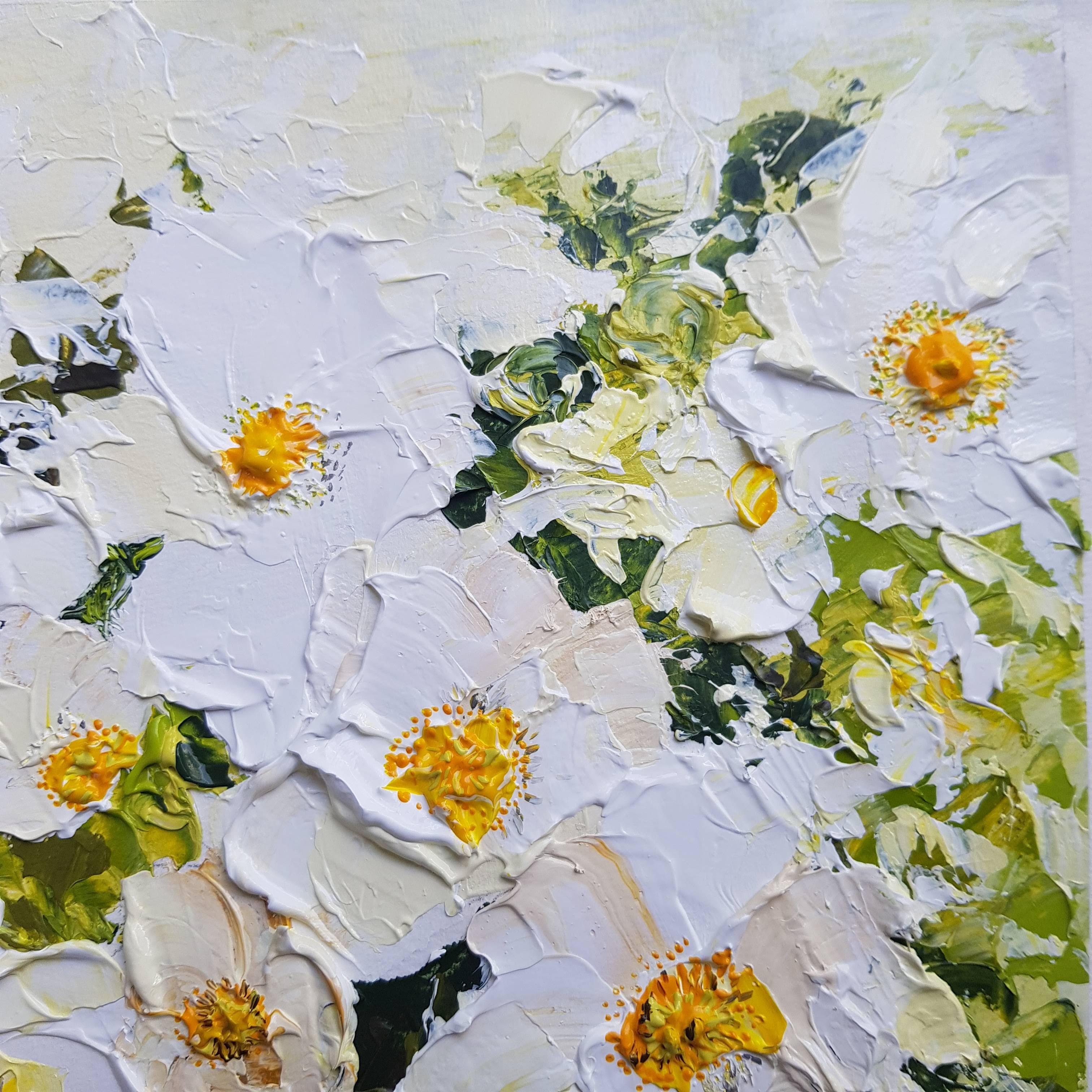
Once the background had been painted a variety of greens were added to represent the dense tangled foliage of the bramble roses.
Palette knives are symmetric, with no sharpened cutting edge, and often have a slight crank between the handle and the blade. The one I am using in the above short clip is one of my favourites. Choose a palette knife with a flexible metal blade and wood handle. Try to avoid a plastic palette knife since they break easily, and they are not so effective especially when working with thick paint and heavy textured mediums. Take note of how the different shades of green are blended off the palette knife onto the paper
TOP TIP: when using a palette knife collect more than one shade of the paint you are working with onto the “blade” of the knife. This means when you draw your palette knife down onto the paper (in this particular case) the colour is smeared in a way that the result is a spontaneous blend of colours directly from the palette knife onto the surface that cannot be contrived, or manipulated by a brush, or palette knife. This is specifically evident in the video showing the application of leaves. Keep the colours pure and wipe the palette knife between applications, or the colours can blend into a muddy dark uninteresting mess.


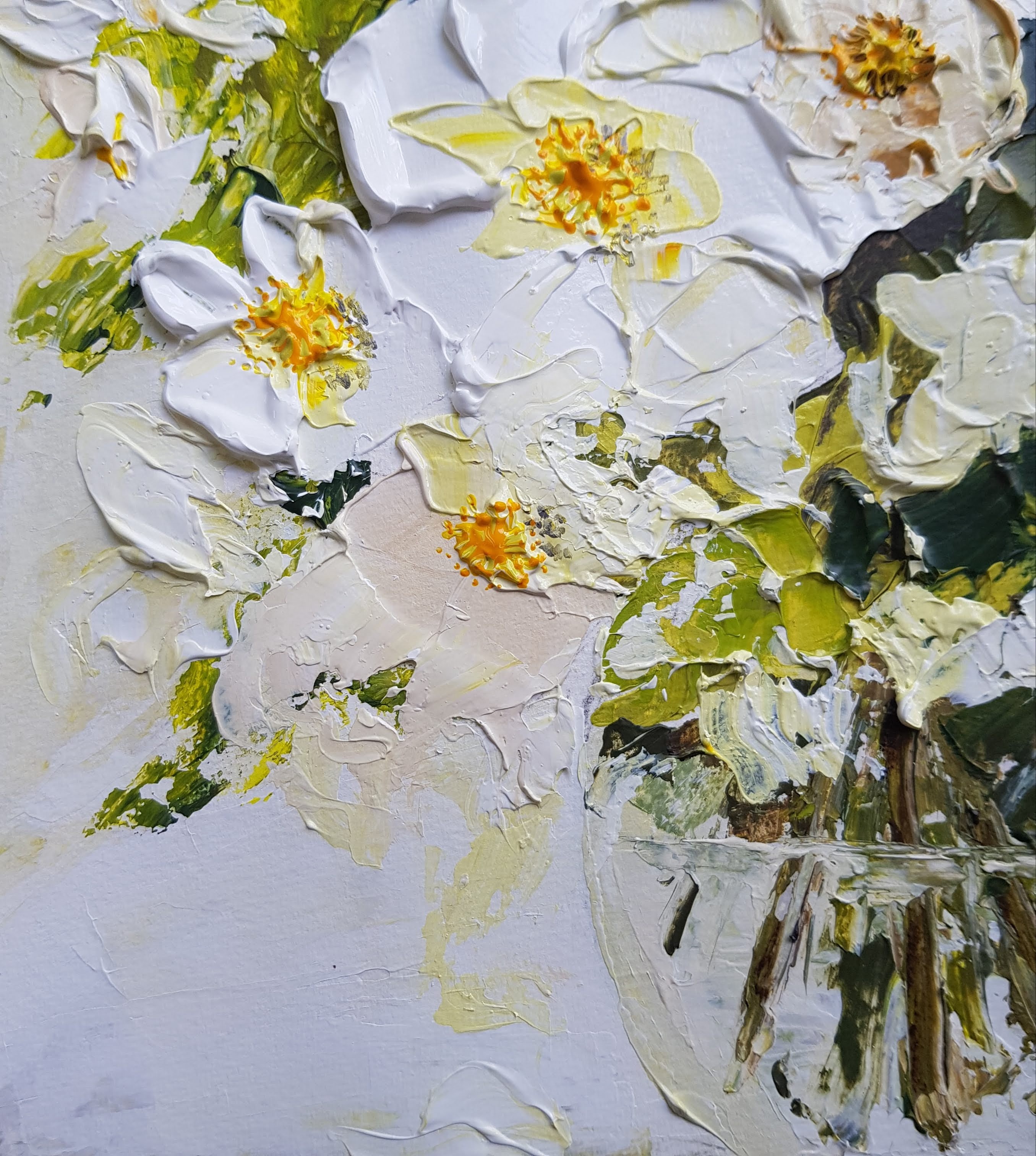
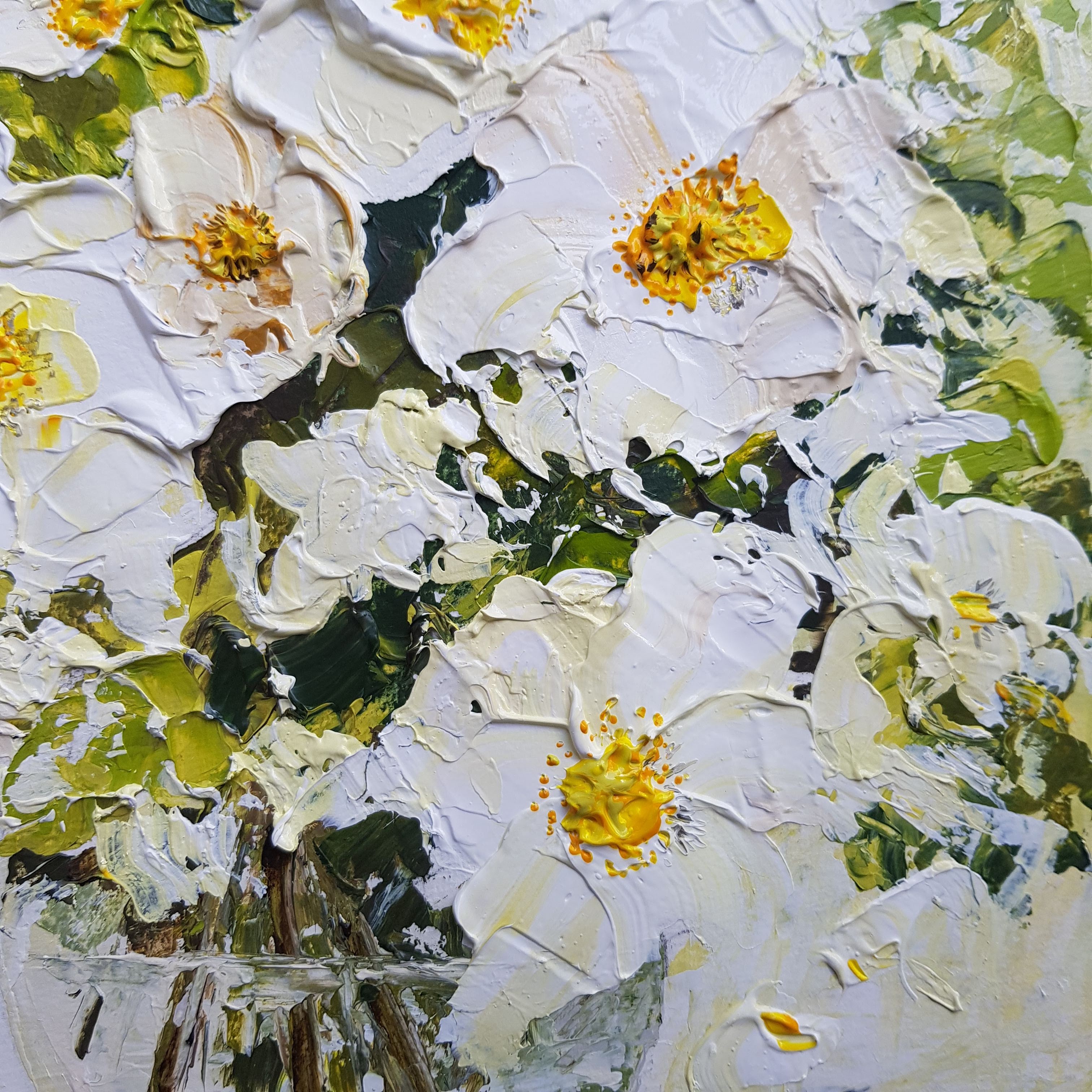
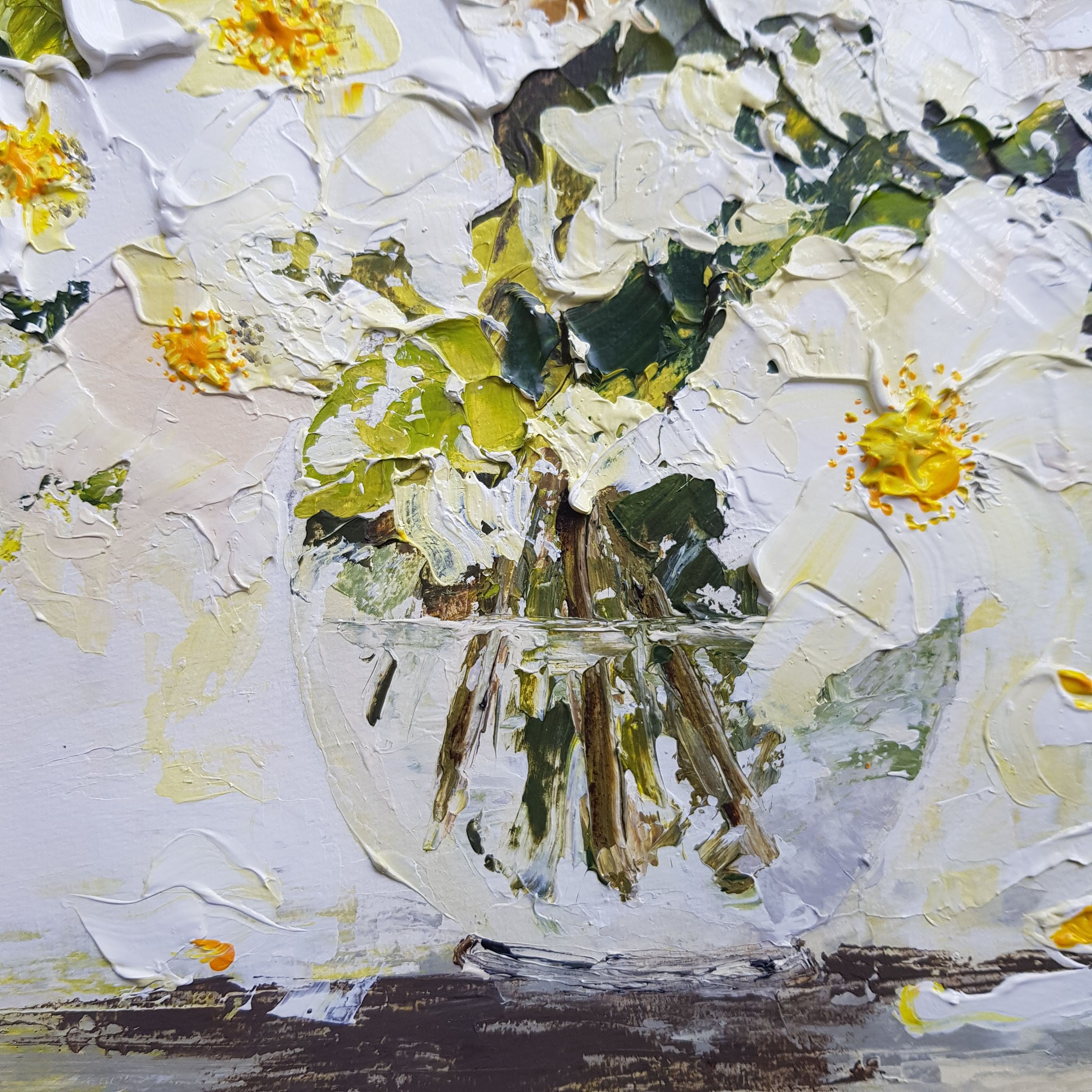
The application of paint is thick and textured, and alludes to the shape of the bramble rose rather than being realistically accurate.
I use a variety of different shaped palette knives with specific shapes that are going to create the particular shaped petals I need. The one visible in the above video has a broader flat angled end which is ideal for creating the flat, open petal of this particular shaped rose. I use a silicone colour shaper to add the yellow pollen centre of the flower.
The Impasto technique used in the painting, where the paint is laid on the surface in very thick layers, usually thick enough for the painting-knife strokes to be visible. When dry, impasto provides texture; and the paint appears to be coming out of the canvas.


 artbyeileen