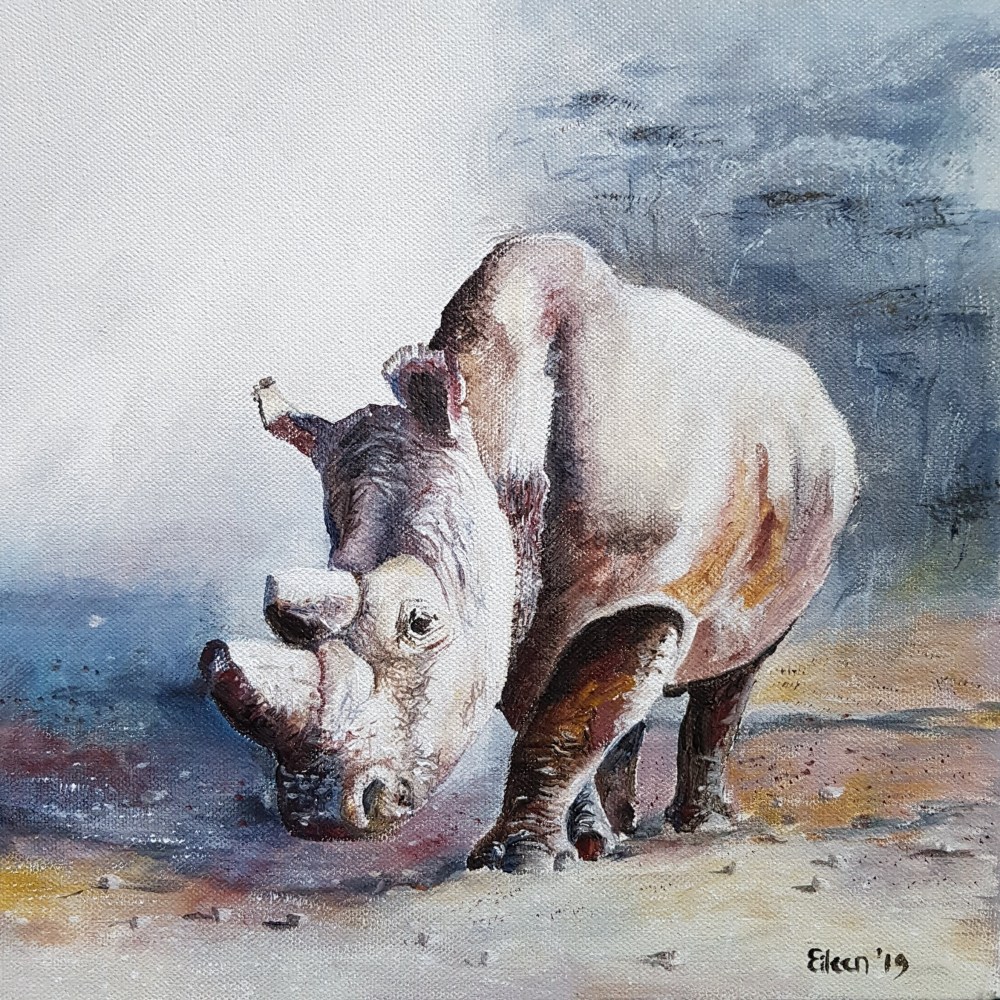
These amazingly majestic creatures are among my favourite of all the animals and living where we do we are fortunate enough to be able to see them on a daily basis. These gentle giants can be a little intimidating, especially when threatened and charge at what is frightening them. Phil and I experienced this first hand when walking in the Kaokoveld, and a black rhino (known to be a little grumpy) took exception to us walking in his territory. Needless to say we scaled a cliff in record time. Fortunately for us there was a scalable cliff, or the outcome may have been different. Irrespective of this little adventure it has not changed my opinion of the rhinoceros. They are beautiful, gentle creatures who deserve to be left in peace.
In just a decade, more than 8,300 African rhinos have been lost to poaching. South Africa holds nearly 80% of the world’s rhinos and has been the country hit hardest by poachers, with more than 1,000 rhinos killed each year between 2013 and 2017.
Although habitat loss is something one needs to consider, poaching remains the main threat. Rhino horn is sadly a highly valued component of traditional Eastern medicine practised in China, Vietnam and other parts of Asia. Poaching of rhino has soared over the last decade due to the increased demand for rhino horn from Asian markets. One of the saddest things about the murder of these magnificent beasts is the fact that their horns, despite some Eastern medicinal practitioners’ claims, are essentially useless as a medical treatment. That’s because rhino horns aren’t made from any special material; they contain nothing but keratin, the same proteins as human hair and fingernails. (Someone should tell them to chew their own nails and hair, and leave the Rhinos alone). The value of rhino horn is more than gold and cocaine, and unscrupulous rhino horn dealers pay impoverished poachers more money than they would see in their life time for rhino horn perpetuating the cycle and trade in rhino horn, and while government officials are a part of this corruption saving the rhino from extinction is going to remain a challenge.

Some Rhino facts:
Phylum: Chordata
Family name: Rhinocerotidae
Classification: Mammal
IUCN status: Black, Javan and Sumatran rhino: Critically endangered. White rhino: Near threatened. Indian rhino: Vulnerable.
Lifespan (in wild): 40 to 50 years (if they manage to escape poachers)
Weight: 500kg -2,500kg
Body length: 2.5m-4m long
Top speed:55km/hour
Diet: Herbivore
Habitat: grassy plains, rainforests and swamps.
- “Rhinoceros” comes from Greek. Rhino (nose) and keras (horn).
- A group of rhinos is properly referred to as a “crash.”
- Despite their names, white and black rhinos are pretty much the same colour. The distinction has nothing to do with their skin colour. Dutch settlers, referring to the creature’s wide square mouth, originally called the white rhino “whyde”. The black rhino has two more chromosomes than the white rhino; the white rhinos have broad lips for grazing on grass and the black rhinos have long lips for eating foliage off of plants; and black rhinos weigh about half as much as their white counterparts. Even with their differences though, the two species can still interbreed and produce fertile offspring.
- Rhinos’ feet are surprisingly sensitive. As they walk, rhinos put most of their weight on their toenails. In the wild, they walk around in grasslands, marshes and wetlands, which don’t wear down their toenails.
- During the heat of the day, they can be found sleeping in the shade or wallowing in muddy pools to cool off. The mud protects their skin from the strong sun (like a natural sunblock) and wards off bugs.
While loss of habitat has been a problem for the beasts, their biggest threat remains poachers. Unfortunately, this problem is only getting worse. Some officials estimate that only 3% of poachers are actually being caught. To stop the killing, reserves have tried a variety of tactics, including removing the horns altogether. No matter what officials do to try to stop the killers though, the lure of massive amounts of money, especially during the global recession, is just too powerful. So how much are rhino horns worth? Well, one average size horn can easily bring in a quarter of a million dollars.
I paint rhinos because I love them; I never get tired of seeing them in the parks we visit. It saddens me that these beautiful creatures are slaughtered so cruelly for their horns and as a result they are now considered an endangered species! The tragedy is many of the rhino killed leave behind orphans or butchered rhinos that have not been killed when their horns were viciously hacked from their bodies. There are groups that rescue these traumatised and brutalized animals and care for them, and if it were not for the tireless dedication of groups such as Care For Wild and Saving the Survivors our wildlife would suffer even more, and ultimately be lost to humanity. If you would like to make a donation please go to their website. Care For Wild encourage donors to spend as little as $5 for a bale of chaff that will go towards feeding a rhino. The bottom line is every little bit counts and anything you are able to give makes a difference.


 artbyeileen