The first step was to stain a 30 X 30cm canvas ready for painting. The practice of staining a canvas is called, imprimatura. This is an initial stain of color painted on as a ground. It provides a painter with a transparent, toned ground, which will allow light falling onto the painting to reflect through the paint layers. The term originates from Italian and literally means “first paint layer”.

The tea coloured stain is evident in the above canvas as well as the burnt umber where I have painted in the shadowed areas.
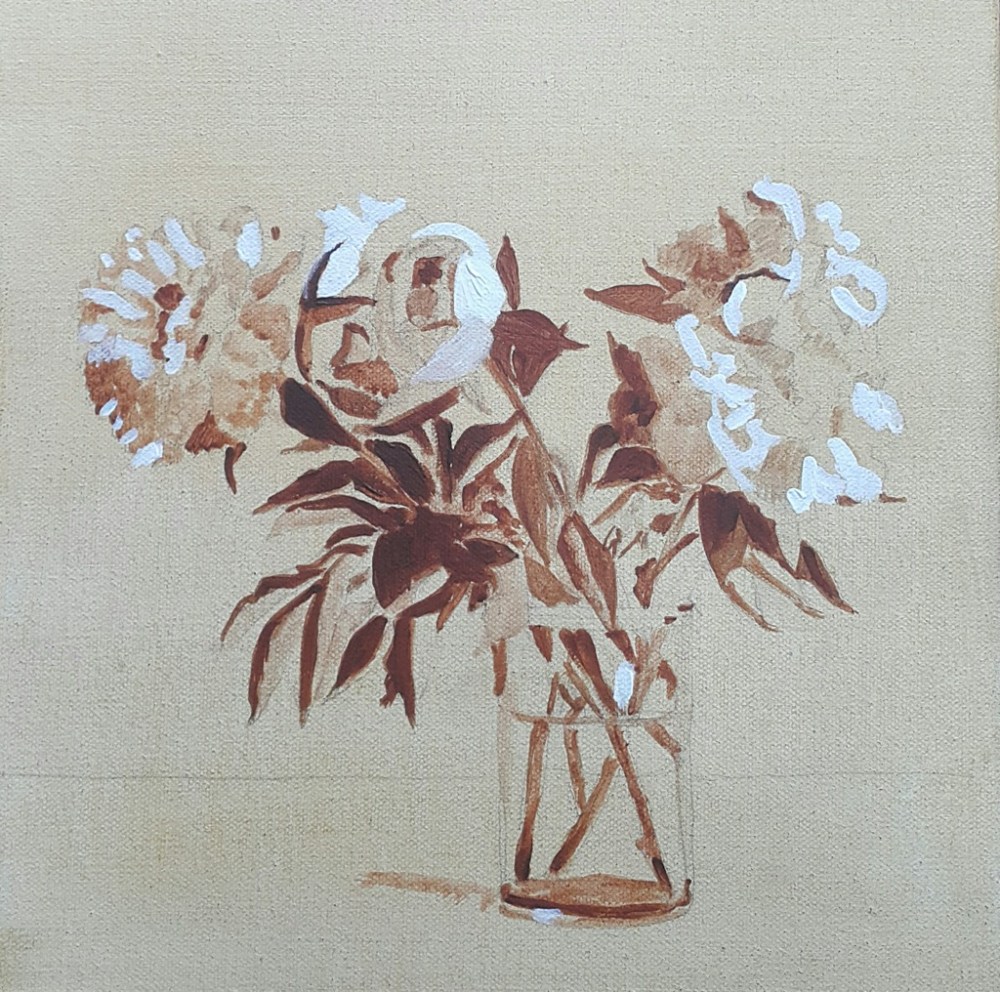
Here the white highlights have been added before beginning with painting the leaves.
This almost tea colour was created with a mixture of Ultramarine Blue, Raw Umber and Yellow Ochre mixed with airbrush medium which gave it a thin fluidity without separating like we would see happen if water were used as a medium. This was scrubbed on to the canvas and then even out once all the little nooks and crannies were covered giving a lovely subtle stain to the white canvas.
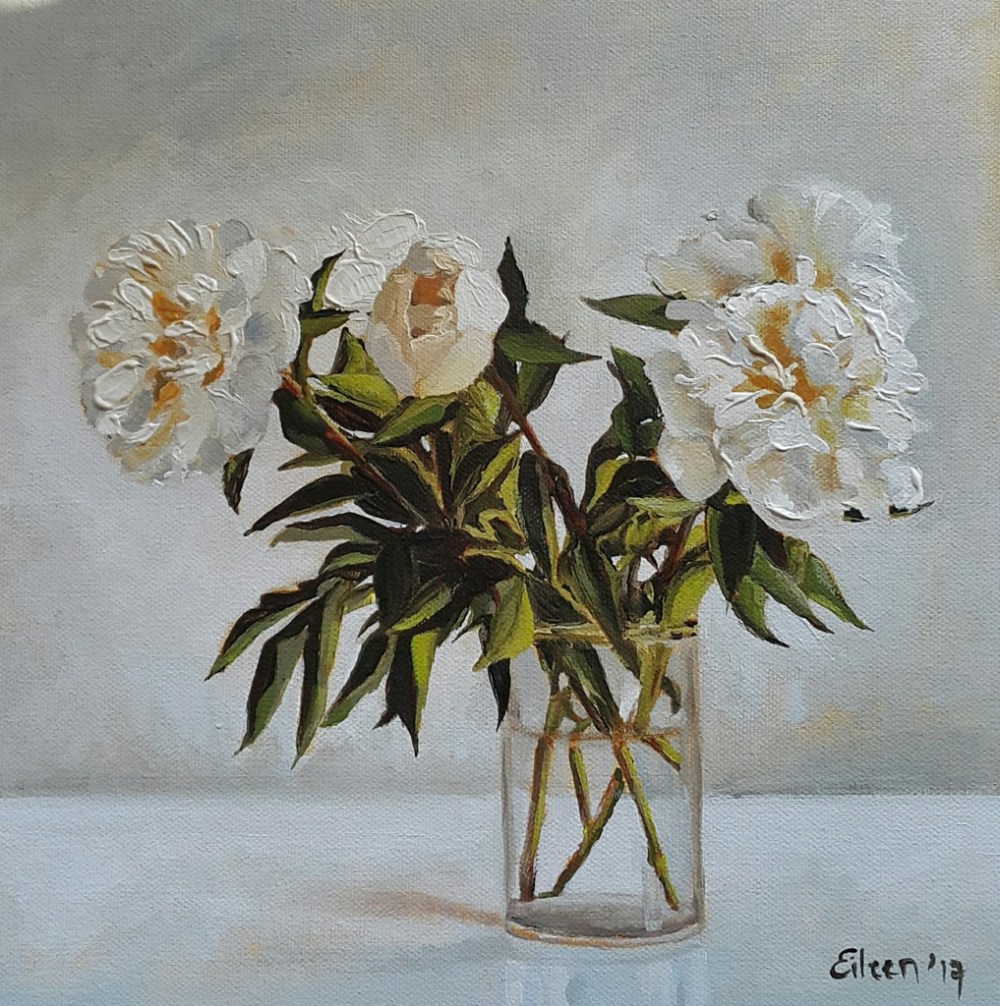
A vase of White Peonies
Acrylic on canvas
30 X 30 x 4 cm
For the painting I used the following range of pigments:
- Titanium White
- Burnt Umber
- Raw Umber
- Cadmium Yellow Light
- Yellow Ochre
- Raw Sienna
- Ultramarine Blue
- Permanent Alizarin Crimson
And to create the glazes I used a gloss acrylic-glazing medium.
- Once the stain had dried I could begin transferring the drawing in pencil onto the canvas.
- Blocking in the shadows in pencil
- Adding details to the flower heads
- Once the pencil drawing was completed I stabilized the pencil drawing with fixative.
- Blocking in the dark shadowed areas with burnt umber and a light wash to the flower heads
- Identifying the patterns of light and blocking them in with titanium white
- Mixing the greens and painting the leaves
- Mixing white tones and painting the flower heads
- Final impasto on the petals of the peonies and glazing the inside of the flower heads.


 artbyeileen
Did you not do something additional to the background? Thanks for posting all the steps. I may try some acrylic soon and really don’t have much idea how to go about it. You have achieved a lovely atmosphere here.
Acrylic is so much easier than water colour. YouTube has so many videos available to give a beginner an idea of where to start. Do a couple of simple shapes first like an apple or pear till you get used to the medium and progress form there. You already have experience with colour mixing principals. The background has just a mixture of titanium white, ultramarine blue and burnt umber painted over the stain. In some ares it’s almost dry brushed on so the stained canvas is evident beneath the paint. I usually work on the background after I have blocked in the burnt umber darker areas and the light titanium white areas. Only at the end do I go back and adjust the background colour to work better with the subject. In this case I had to slightly darken the areas around the peonies on the right as the background was too similar to the petals and some of the areas were just a little too blue on the “table”, which I just greyed down a bit by adding a little burnt umber to the mix.
Thank you very much.